
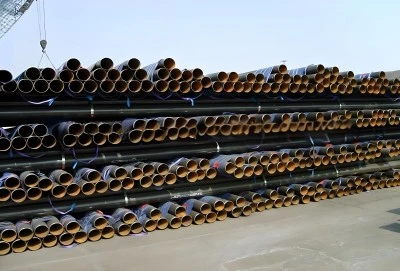
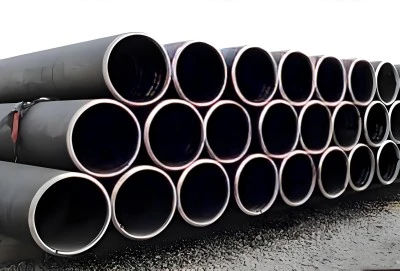
API 5L X42 PSL1 pipes are manufactured in a comprehensive range of sizes to accommodate diverse pipeline applications. The available outer diameter spans from 1/2 inch (21.3mm) to 80 inches (2032mm), with wall thickness options ranging from Schedule 10 to Schedule 160 (6.35mm to 59.54mm). Standard production lengths typically fall between 6 meters and 18 meters, though custom lengths can be arranged based on project specifications. These pipes are produced using multiple welding technologies including ERW, LSAW, and SSAW methods, allowing procurement managers to select dimensions that precisely match their oil and gas transportation, water supply, or structural applications.
|
|
|
Introduction
Pipeline acquisitions impact project timelines, safety, and cost. Oil, gas, water, and industrial infrastructure engineers and procurement managers must understand line pipe size. X42 is a good compromise with a minimum yield strength of 42,000 psi and a lower cost than higher-grade options.
I've learned from working with engineering firms and project teams in the Middle East, Australia, and Southeast Asia that faulty measurements or unclear specifications delay procurement. This lesson solves that problem using size. This lets you match technical demands with suppliers' knowledge early in project planning. MOBIL OIL AUSTRALIA or regional water infrastructure? Pressure and transport logistics depend on size.
Without PSL2 testing, PSL1 improves general dependability. It operates at regular pressure without Charpy V-notch impact testing. Knowing this pipe type's dimensional topography helps your team choose the best products, save lead times, and manage multi-phase projects.
Understanding API 5L X42 PSL1 Pipe Size Specifications
Nominal Pipe Size and Outside Diameter Standards
Standard Nominal Pipe Size (NPS) gives a continuous reference without measurements. Even when wall thickness grows, NPS outer width stays fixed. This streamlines system design and fitting choices. Instrumentation and other systems use sub-1/2-inch pipes. Mainline gas and oil pipelines are 8–24 inches. High-volume water transport and offshore platform construction projects that demand flow capacity use diameters up to 80 inches (2032 mm).
What can be made depends on the method. From 1/2 inch to 24 inches, ERW pipes have continuous sizes. This makes them perfect for precision jobs. LSAW technique can handle 16–80-inch diameters, making it excellent for thick-walled, large-bore trunk pipes in high-pressure service. Spiral welded (SSAW) pipes have medium to large diameters. Directed welding for water transportation and structural use is cheaper.
Wall Thickness Schedules and Their Technical Implications
Construction strength and pressure resistance depend on wall thickness. Standard thickness increments are in Schedule 10–160. Standard moderate-pressure is SCH 40. A 12-inch SCH 40 NPS pipe has 9.52-mm wall thickness. The same-diameter pipe wall thickness rises to 12.7 mm in SCH 80, boosting pressure and mechanical strength.
Tho heavier, costlier, and harder to connect, thicker walls can withstand greater operating pressures. Buying teams must decide whether standard designs work or if custom wall thicknesses are cheaper. Longma Group's 6.35mm–59.54mm production is adaptable. Engineers may choose sizes to meet performance goals and save money.
Chemical and Mechanical Properties Influencing Size Selection
For X42, the minimum yield strength is 290 MPa and the maximum tensile strength is 415–565 MPa. These mechanical properties are the same for all diameters of API 5L X42 PSL1 pipe; however, API 5L demands more frequent testing as diameter increases. Carbon and manganese in PSL1 grade are below 0.28% and 1.30%. This guarantees metal welding of any size.
Dimensional scaling affects tests. For bigger diameter pipes, take more tensile test specimens from different clock locations around the circle. One specimen may test smaller sizes. Understanding testing differences helps procurement managers schedule documentation and quality assurance. This simplifies order management for staggered project rollouts.
Key Dimensions and Their Role in Choosing the Right Pipe Size
Outside Diameter and Compatibility Factors
For flanges, couplings, and coating applications, the interface dimension is set by the outside diameter. No matter if you choose SCH 30 or SCH 80 wall thickness, a 16-inch NPS pipe will always have a diameter of 406.4 mm. Standardization makes it easier to keep track of parts supplies and lets engineers finish system layouts before wall thickness optimization happens.
The end size is affected by the thickness of the coating. A three-layer polyethylene (3LPE) coating system usually makes the diameter bigger by 3–4 mm, which changes the minimum trench width and how the pipes are bundled for transport. When figuring out how much space is needed for bridge crossings, directional drilling bores, or offshore platform J-tube installations, pipeline engineers have to take these small increases into account.
Wall Thickness Selection for Pressure and Service Life
Standard techniques include width, wall thickness, and material yield strength to calculate pressure. A 24-inch X42 pipe with a wall thickness of 12.7 mm holds greater pressure than a 9.52-mm pipe. Procurement managers should engage with design engineers to ensure their schedules provide appropriate safety margins over the predicted minimum wall requirements.
Another consideration is corrosion allowance. To accommodate metal loss during the design life, engineers frequently specify walls that are thicker than structurally necessary in somewhat corrosive areas. A 2 mm corrosion limit requires a beginning wall thickness greater than the minimum pressure criteria for a 20-year design life. The specification may vary from SCH 40 to SCH 60 for various diameter ranges.
Length and Weight Implications for Logistics Planning
Standard manufacturing lengths are 6–18 meters to accommodate various transport techniques and fulfil welding efficiency targets. 12m lengths are frequent because they balance truck transport with fewer field welds. Longer sections need fewer joints, but they require specific handling gear and route planning to avoid twists and elevation changes during delivery.
The weight per metre increases fast with breadth and wall thickness. A 24-inch SCH 40 pipe weighs 175 kg/m and a 48-inch weighs 700 kg/m. These weight variations affect crane capacity, truck capacity, and ship cargo storage for maritime projects. During procurement, determining the order's entire weight prevents logistical surprises and ensures adequate handling resources at both ends.
Comparing API 5L X42 PSL1 Pipe Sizes with Other Grades and Standards
Dimensional Consistency Across API 5L Grades
The sizes of all API 5L grades are the same. No matter what grade of API 5L you use—X42, X52, or X60—the dimensions must meet the same standards. No matter what grade is chosen, a 20-inch NPS pipe has the same outside diameter and wall thickness schedules. Because of this, procurement teams can judge material types based only on their mechanical properties, without having to rethink how they fit together in terms of size.
Grade selection has a bigger effect on cost than the availability of standard sizes. For moderate-pressure uses, X42 is the most cost-effective option. On the other hand, X52 and higher grades are more expensive because they have higher output strengths. Project teams should check to see if the operating conditions really need higher-grade material or if X42 specifications meet performance standards and are more cost-effective.
PSL1 vs. PSL2 Specification Differences
The main difference between PSL1 and PSL2 is the required tests and chemical composition limits, not the available dimensions. The size ranges for both levels of specification are the same, from 1/2 inch to 80 inches. PSL2 has tighter limits on carbon equivalents and needs Charpy impact testing and paperwork. This adds to lead times and costs that go up by 8–15% per ton.
Projects that work in moderate-temperature, non-sour environments rarely need PSL2 requirements. The PSL1 guideline gives enough guarantee for normal uses like gathering oil and gas, moving water, and building piles. When project conditions allow, procurement managers can speed up delivery times and cut costs by selecting PSL1. PSL2 should only be used in really demanding service settings with low temperatures or sour gas exposure.
Comparison with ASTM A106 and Alternative Standards
ASTM A106 seamless pipe is offered in diameters up to 24 inches, which is smaller than API 5L's lower range. For high-temperature uses, A106 stresses seamless construction. API 5L X42 PSL1 pipe, on the other hand, includes both welded and seamless options across a wider range of sizes. For sizes between 26 inches and 80 inches, where smooth production would be too expensive, welded pipe making is the only option.
Different standards have slightly different limits for measurements. API 5L allows a little bit wider outside diameter tolerances than ASTM A106. This is because API 5L is designed for pipelines, while ASTM A106 is designed for pressure vessels. Even though these small differences don't usually affect field assembly, they should be checked when switching between standards within the same project to make sure that the quality of the fit-up is always the same.
Practical Considerations for Procuring API 5L X42 PSL1 Pipes by Size
Minimum Order Quantities and Production Economics
MOQs are mainly dependent on manufacturing efficiency. Standards including 12 inches, 16 inches, and 24 inches in common schedules have lower MOQs—sometimes as low as 20 tons—due to their frequency of production and stock availability. Special diameters like 54-inch or 72-inch pipes with strong walls may need 100-ton minimums for mill setup and equipment purchases.
Longma Group produces 1,000,000 tonnes of commodities annually, making MOQ negotiations flexible. Customers who wish to mix orders with different diameters will appreciate this. You can usually fulfil weight constraints and accommodate all project materials by combining a large-diameter demand with smaller secondary sizes. Planning purchases around manufacturing efforts may cut MOQs and hasten delivery.
Custom Size Requests and Lead Time Variables
Standard dimension pairs match popular sizes with schedule-based wall thicknesses and ship within 7 days for stock products or 3–4 weeks for new production runs. Custom requirements for non-standard wall thicknesses or intermediate diameters add 6–8 weeks to the lead time, including tool changes and quality control.
Custom measurements should be requested early by phased construction plan engineering contractors. Avoid critical-path delays by obtaining bespoke sizes during basic engineering and standard sizes throughout comprehensive design. Communicating with suppliers regarding manufacturing slots helps align delivery dates with project site relocation dates.
Size-Related Cost Optimization Strategies
As the diameter goes up within the same wall thickness schedule, the price per ton goes down. This is because the material yields more and the welding-to-tonnage ratio goes down. Running parallel 24-inch lines costs more per meter than a 48-inch pipe with the same flow capacity, but the total installed cost must take into account how hard the installation is and how much handling is needed.
Tier pricing benefits can be unlocked by making volume commitments. Framework agreements can help procurement managers get good rates across all size ranges for yearly pipeline repair needs or bundles of multiple projects. When Longma Group buys directly from mills like Shagang, HBIS, and Bao Steel, they don't have to pay markups to middlemen. This lets them offer competitive prices even on orders with modest volumes that are below standard mill minimums.
Certification and Quality Assurance for Size-Specific Orders
Dimensional inspection rigour rises with diameter and application relevance. Statistical sampling checks small-diameter monitoring pipe OD and wall thickness. However, ultrasonic wall thickness imaging is 100% for large-diameter trunk line pipes. Purchase specifications should provide acceptance criteria and inspection frequency to ensure supplier quality plans meet project requirements.
Material test records (MTRs), API 5L certifications, and ISO 9001 quality control documentation monitor pipes from the steel factory to the completed product. Longma Group records chemical composition analysis, mechanical property testing, hydrostatic pressure testing, and non-destructive examination findings. This certification package supports engineering companies' quality management systems and owner-operator audits in all overseas project sites.
How to Verify the Quality and Suitability of API 5L X42 PSL1 Pipe Sizes in Your Project
Dimensional Verification Protocols
Accurate pi-tapes or laser micrometres are utilised at various pipe lengths to assess outer diameter. OD limits in API 5L range from ±1% for sizes up to 20 inches to ±0.75% for larger diameters. Most applications limit ovality—the difference between the largest and smallest diameters at any cross-section—to 2%. However, some service conditions may need lower restrictions.
Calibrated ultrasonic testing equipment checks wall thickness against certified reference blocks. Different times around the diameter are measured, and the lowest result is compared to the prescribed thickness minus a negative tolerance. Scheduled orders have a negative tolerance of 12.5% for thinner walls and 0% for thicker walls. Custom thickness requests typically need a ±10% bilateral tolerance.
Non-Destructive Testing for Weld Seam Integrity
NDT is needed for longitudinal seams while welding pipes. After welding, ERW pipes are examined for absence of fusion, inclusions, and incomplete entry using electromagnetic or ultrasonic radiation. LSAW pipes are examined using ultrasound and infrared to ensure weld quality along the seam.
Inspection sensitivity meets service earnestness. Standard PSL1 applications permit weld defects below defined sizes. However, higher inspection standards cut critical service application restrictions by 50%. The procurement documents should reference appropriate NDT standards to ensure supplier inspection methods fulfil project quality requirements. Ultrasonic procedures use ASTM E213 while radiographic methods use ASTM E165.
Mechanical Property Testing Aligned with Size Categories
For tensile testing, samples are taken from the pipe body material, and the number of samples taken increases as the width increases. Pipes less than 16 inches in diameter need to be tested once for each heat and size combination. Pipes with bigger widths need to be tested from more than one place around the circumference. The test results must show a yield strength of at least 290 MPa and a tensile strength between 415 and 565 MPa. The minimum extension depends on the gauge length of the piece.
Case Study: Dimensional Accuracy Impact on Offshore Platform Construction
For the building of jacket legs on an offshore platform project in Southeast Asia, 42-inch LSAW pipes were required, along with strict OD tolerance standards to make sure they fit correctly with pre-fabricated nodes. The pipes that were bought from an uncertified source were 1.8% out of round, which caused assembly delays and meant that they had to be ground in the field to get them to a satisfactory level of roundness. With better dimensional inspection standards, re-procurement from Longma Group provided pipes that didn't exceed 0.8% ovality limits. This fixed fit-up problems and made up three weeks of lost time. The accuracy in the measurements directly led to lower costs for rework and kept the critical path for offshore installation weather windows on track.
Conclusion
Identifying line pipe diameters affects how soon you can acquire it, how long the work takes, and how dependable it will be. These pipes may be utilised for practically any pipeline or building project in oil and gas, water infrastructure, or industrial development with wall thicknesses from 6.35 mm to 59.54 mm and widths from 1/2-inch support systems to 80-inch trunk lines, including API 5L X42 PSL1 pipe applications. Buying teams, design experts, and certified manufacturers must collaborate to discover the optimal diameter, wall thickness, and length alternatives while considering pressure, corrosion, and space. Project teams may safely choose sizes and maintain global construction momentum with recognised suppliers who provide full-spectrum dimensional capabilities, tight quality assurance, and timely technical assistance.
FAQ
1. What are the standard production lengths for API 5L X42 PSL1 pipes?
The standard lengths for production are between 6 meters and 18 meters, with 12 meters (40 feet) being the most common. This length maximizes the ease of shipping while lowering the number of field welds. Orders for random lengths, where exact lengths vary within a certain range, usually ship faster and cost less than orders for cut-to-length, which need exact measurements. For projects that need to be as productive as possible with welding, double random length (DRL) options between 11 and 13 meters are good. Single random length (SRL) options with parts of 6-7 meters are better for situations where shorter sticks are needed because of entry issues or installation methods.
2. Can manufacturers produce non-standard or custom sizes?
Custom dimension making is still possible for wall thicknesses and sizes that don't fit into normal schedules. For production, the minimum order quantity is usually between 50 and 100 tons, but this depends on how complicated the dimensions are. Lead times are extended to 6–10 weeks to allow for the preparation of tools and quality checks. Managers in charge of buying things should give specific details like the outside diameter, wall thickness, length, end treatment, and any testing needs that apply. Longma Group's integrated manufacturing facilities can handle custom sizes for a wide range of uses. They offer technical help to find the best sizes by matching performance needs with the ability to produce and the lowest cost.
3. How does wall thickness affect pressure ratings?
The Barlow formula connects internal pressure to pipe diameter, wall thickness, and material yield strength. It shows that wall thickness has a direct effect on the maximum allowable operating pressure. In a 16-inch diameter pipe, the pressure capacity goes up by about 35 to 40 percent when the wall thickness goes from SCH 40 to SCH 80. On the other hand, lowering the thickness to save weight and money lowers pressure ratings in a proportional way. When figuring out safe working pressures, design engineers have to take corrosion limit, temperature de-rating factors, and lengthwise weld joint efficiency (which is usually 1.0 for API 5L pipes) into account. API 5L doesn't give pressure values; that's the job of the person designing the pipeline using accepted codes like ASME B31.4 or B31.8.
Partner with Longma Group for Reliable API 5L X42 PSL1 Pipe Supply
Choosing the right pipe measurements is only the first step in completing a job successfully. Longma Group is a reliable API 5L X42 PSL1 pipe manufacturer that offers a wide range of sizes, from 1/2-inch to 80-inch diameters, with wall thicknesses from SCH 10 to SCH 160. Our 230,000-square-meter factory makes more than 1,000,000 tons of steel every year, using ERW, LSAW, and SSAW technologies to meet a wide range of size needs. We keep the quality the same across all size groups by getting our raw materials from top local mills like HBIS, Shougang, and Bao Steel. Our ISO 9001 and API 5L certifications make sure that the dimensions are correct and that the mechanical properties are met. We also provide full paperwork, such as MTRs, ITPs, and MPS, to support your quality control systems. Contact us at info@longma-group.com to talk about how our engineering team can help you get the pipes you need at the best price, on time, and with the best performance, whether your project needs standard sizes and delivery in 7 days or custom specs for unique uses.