
When searching for a dependable ISO 3183 L360 offshore pipeline steel pipe supplier in China, procurement managers need partners who demonstrate consistent quality, global logistics capability, and deep technical expertise. The ISO 3183 L360 pipe represents an industry benchmark grade widely adopted across petroleum, natural gas, and offshore platform projects worldwide due to its balanced mechanical properties and cost-effectiveness. Chinese manufacturers like Longma Group offer competitive advantages through certified manufacturing processes, rigorous quality control, and flexible customization options that meet stringent international project requirements.
|
|
|
Understanding ISO 3183 L360 Offshore Pipeline Steel Pipe
What Defines the L360 Line Pipe Grade?
ISO 3183 sets international standards for steel pipes that are used in pipeline systems for the natural gas and oil businesses. The name "L360" refers to a line pipe with a minimum yield strength of 360 megapascals, which is the same as the API 5L X52 grade according to the American Petroleum Institute's naming system. Because these standards are the same, engineers who know either one can safely describe materials in a wide range of markets and regulatory settings.
The ISO 3183 L360 pipe grade solves important problems in the industry by offering dependable structural performance at medium to high pressure levels without the need for costly metal additions. This grade's track record has been used for projects in a wide range of landscapes, from the hot desert to the freezing ice. Because it has balanced qualities, it can be used in situations where both mechanical strength and field weldability are important. This makes installation easier and cuts down on project timelines.
Chemical Composition and Mechanical Performance
Controlled carbon content, usually no more than 0.22% in PSL1 standards, is a part of the chemicals that make up ISO 3183 L360 pipe. This makes sure that it can be welded properly without losing its strength. Manganese content can reach 1.40 percent, which helps smooth out the grains and make the material stronger. For the best microstructure in steel, this standard microalloy design uses elements like niobium, vanadium, or titanium in exact amounts. The managed carbon equivalent value lowers the chance of cold cracking during welding, which is very important for building teams working in the field who are pressed for time.
Between two product specification levels, the mechanical features are different. PSL1 has a minimum yield strength of 360 MPa and a minimum tensile strength of 460 MPa, which makes it good for everyday use. PSL2 has better performance, with a yield strength of 360 to 530 MPa and a tensile strength of 460 to 760 MPa. It also has strict chemical makeup limits and notch toughness standards. This higher level of standard is for harsh offshore settings where sulfide stress cracking protection is important. When the PSL2 versions are put through sour service conditions with low levels of hydrogen sulfide, they show good resistance to hydrogen-induced breaking.
Manufacturing Methods and Thickness Standards
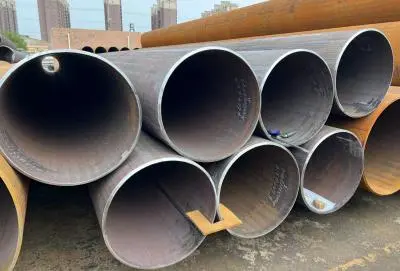
There are three main ways to make ISO 3183 L360 pipes: Electric Resistance Welding (ERW) with high-frequency induction, Submerged Arc Welding (SAW) in both longitudinal (LSAW) and spiral (SSAW) forms, and seamless (SMLS) production through hot extrusion or cutting. Each way of making something has its own benefits that depend on the diameter needs, wall thickness needs, and output numbers. For mid-diameter pipes, ERW pipes work best because they are very consistent in size, while LSAW pipes can handle bigger diameters and thicker walls that are needed for high-pressure offshore uses.
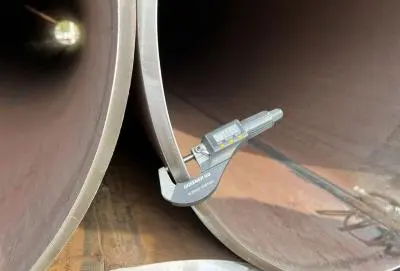
Optimizing the wall thickness is a key part of finding the best balance between the ability to control pressure and the cost of materials and the ease of installation. To figure out how thick something needs to be, engineers look at things like internal pressure rates, external loads, corrosion allowances, and safety factors that are needed by design codes. The wide range of thicknesses included in the ISO 3183 L360 pipe specs lets buying teams match pipe sizes exactly to the needs of the project without over-engineering, which has a direct effect on the total cost of installation.
Comparing L360 with Alternative Grades
Procurement workers can make better decisions when they know how ISO 3183 L360 pipe stacks up against grades that are close by. The yield strength of L290, which is the same as API 5L X42, is lower at 290 MPa. This makes it good for low-pressure gathering systems and saves money on materials in situations where the highest pressure values are low. In contrast, L415 (API 5L X60) has a yield strength of 415 MPa for high-pressure trunk lines, but it needs more complex welding techniques and costs more for the materials.
Compared to ASTM A106 seamless carbon steel pipe, which is often used for refinery pipes, ISO 3183 L360 pipe has better mechanical qualities that make it ideal for underground and offshore pipeline service. Even though they are strong, API 5CT casing and tube types are not good alternatives because they are used for drilling wells underground and not for moving things on the surface. This grade difference makes sure that each type of material can be used in the right way for its intended purpose, with the right testing procedures and production controls.
How to Choose the Right Offshore Pipeline Steel Pipe for Your Projects?
Key Technical Selection Criteria
In addition to basic strength values, there are other specialized factors that need to be looked at when choosing the right line pipe. Offshore settings are very important for corrosion resistance because saltwater, cathodic protection systems, and coating performance are all constantly interacting with each other. When compared to normal PSL1 specs, ISO 3183 L360 pipe PSL2 grades with stricter cleanliness rules and limited sulfur content show better resistance to localized corrosion processes.
Delivery dates have a big effect on how projects are planned, especially when it comes to large-diameter offshore pipes that need special manufacturing facilities. Procurement managers can schedule material deliveries to fit building windows when they know how long it usually takes to get different sizes and amounts of pipes. Chinese makers usually keep stock of popular sizes, but custom orders for heavy-wall offshore requirements need more time to plan production.
Performance Comparison Across Grades
When engineers compare ISO 3183 L360 pipe to API 5L Grade B (245 MPa yield strength), they know that the higher strength lets them use thinner walls for the same pressure levels. This means that the pipes are lighter and cost less to install. Compared to ASTM A106 Grade B seamless pipe, ISO 3183 L360 pipe has similar tensile properties. It also has better chemical properties for field welding, which is important for pipeline building versus static plant pipes.
When you compare it to L415, you can see some interesting trade-offs. L415 allows thinner walls with the same pressure values, but the higher strength means that welding factors need to be more carefully controlled, and the consumables may need to be of better quality. L360 pipe is often chosen for long-distance onshore pipeline projects because it strikes the best mix between structural strength and ease of installation. Offshore platform builders will sometimes choose L415 or higher grades when they need to cut weight to save room, even though it makes welding more difficult.
Cost-Performance Analysis for B2B Buyers
The original pipe buying price is only one part of figuring out the total cost of ownership. The strength-to-weight ratio of ISO 3183 L360 pipe makes it a great choice for shipping to rural project sites across foreign borders, where costs go up as pipe weight goes up. Installation work is a big part of the cost, and L360 pipe's great weldability cuts down on welding time, inspection rejection rates, and the need for heat treatment compared to options with higher strengths.
Longterm practical concerns include the ability to do internal inspections. Consistent wall thickness and dimensional standards make it easier for intelligent pigs to pass through during integrity monitoring programs. As an industry standard grade, ISO 3183 L360 pipe is widely used around the world. This makes sure that suitable fittings, valves, and repair materials are always available throughout the lifespan of an asset. When figuring out lifecycle costs, procurement managers know that these factors often make up for small changes in the original price of materials.
Conclusion
To find the best ISO 3183 L360 pipe provider in China, you need to carefully look at their technical skills, quality systems, and service promises. The L360 grade is the standard for oil and natural gas transportation infrastructure around the world because it has balanced mechanical qualities, is standardized around the world, and has a history of good performance. Chinese companies like Longma Group offer great value by using certified production methods, keeping prices low, and providing full support services that are suited to the needs of foreign projects. Procurement experts can use our combined production, construction, coating, and paperwork skills to make the supply chain simpler while keeping the high quality standards needed for offshore pipeline safety.
FAQ
What are typical lead times for L360 pipe orders?
Standard sizes and standards for ISO 3183 L360 pipe usually ship 30 to 45 days after the order is confirmed and the fee is received. Custom orders that need specific changes to the chemical makeup, wall thicknesses that aren't standard, or special testing methods usually take 60 to 90 days. For large projects, it may be possible to work out delayed delivery plans that work with the needs of the building phase. We suggest getting in touch with our technical team early on in the planning process to set reasonable deadlines.
How can buyers verify pipe quality and certifications?
The first step in checking the quality is to look at the manufacturer's ISO 9001 and API 5L certifications. Material test certificates that meet the requirements of EN 10204 Type 3.1 give complete chemical and mechanical test data that can be tracked back to its source. A lot of customers hire outside inspection companies to watch the production, testing, and final inspection before the goods are shipped. Longma Group lets customer agents and outside inspectors look around our factories and has full access to our quality records and manufacturing processes.
What distinguishes ISO 3183 L360 from API 5L Grade B?
Both Grades B and ISO 3183 L360 pipe can be used in pipelines, but Grade B's minimum yield strength is only 245 MPa, while Grade L360's is 360 MPa. Because it is stronger, the walls can be thinner while still holding the same amount of pressure. This saves money on materials and time during installation. L360 has stricter rules over its chemical make-up, especially limits on carbon equivalents that make it easier to weld. For mid- to high-pressure service, projects that need the best cost-performance ratios usually choose L360 over Grade B.
Partner with a Trusted ISO 3183 L360 Pipe Manufacturer
Longma Group is ready to help you with your next offshore pipeline project by providing approved ISO 3183 L360 pipe options that are made to work in harsh conditions. We are your trusted partner for buying line pipes because we have been making things for 20 years, have all the necessary quality certifications, and can ship goods all over the world. We work with general builders, procurement managers, and pipeline engineers who need quick technical help, low prices, and flexible delivery times. Email our team at info@longma-group.com to talk about the details of your project, get full technical documentation, or set up a visit to our location. Find out why Longma Group is the first choice for major energy companies in 90 countries when they need ISO 3183 L360 pipes for important building projects.