
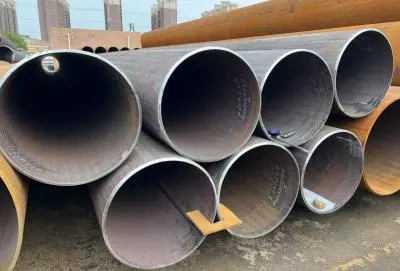
When selecting ISO 3183 L320 pipe for important infrastructure, the wall thickness tolerance directly affects the safety and stability of the pipeline. ISO 3183 says that L320 pipes made under PSL 1 specifications can have a wall thickness error of +/-10% or +/-0.5 mm, whichever is bigger. PSL 2 specifications, on the other hand, limit this to +/-0.5 mm for most diameter ranges. This accuracy makes sure that the pressure-bearing capacity, weldability, and rust resistance are always the same. These are three things that have a big effect on how long medium-pressure gathering systems and natural gas transportation networks last.
|
|
|
Understanding ISO 3183 L320 Wall Thickness Tolerance
Defining the L320 Grade Within ISO 3183
ISO 3183 sorts line pipe steel into groups based on its minimum yield strength, which is given in megapascals. The name L320 means that it has a minimum yield strength of 320 MPa, which is about 46,400 psi. This makes it the metric equal of API 5L Grade X46. This grade is used in medium-pressure situations where stronger steel than L290 is needed but the very thick walls of L360 or higher grades would not be cost-effective.
How Wall Thickness Tolerance Affects Material Performance
Tolerances in wall width have a direct effect on three important performance factors. To keep pressure inside, the material needs to have a uniform cross-section so that the hoop stress is spread out evenly around the pipe. When the wall thickness is less than what is required, stress can build up in one place and spread to other parts of the system when it is loaded and unloaded over and over again, which is common in collecting systems.
Weldability depends on how evenly the heat is spread during fusion. It's harder to control the welding parameters when pipes have a lot of different thicknesses, which could cause partial fusion or heat-affected zone brittleness. The chemical make-up of L320 grade steel, which includes up to 1.30 percent manganese and possible niobium or titanium micro-additions, improves the smoothness of the grains and the toughness at low temperatures. However, these mechanical advantages are lessened when uneven thickness causes uneven cooling rates during the heat treatment after welding.
Corrosion allowance estimates assume that the ISO 3183 L320 pipe will have a minimum wall thickness for its entire working life. Buyers are usually allowed a corrosion cushion of 1 to 3 mm, but this can change based on the material being shipped and how long it will be exposed to the environment. If pipes are made at the lower tolerance limit, this safety cushion is reduced, which could mean they need to be replaced too soon in sour service conditions with hydrogen sulfide.
Measurement Standards and Verification Methods
ISO 3183 says that the width must be measured at the pipe body using ultrasound testing equipment that is set up to pick up differences as small as 0.1 mm. Manufacturers usually do a 100% UT check along the lengthwise seams of LSAW pipes and along the helical seams of spiral-welded pipes. The measurement routine calls for readings to be taken at least four places around the circumference of each pipe length. The results must be written down on the Material Test Certificate.
Acceptance standards change based on the width and the way the product is made. Due to the way rotary piercing works, seamless pipes have natural thickness differences. Submerged arc welded pipes, on the other hand, keep their specs tighter through controlled plate making and automatic welding. It is important for procurement teams to be clear about whether acceptance is based on standard thickness or minimum ordered thickness. This is because the difference between the two affects both price and quality control procedures.
Comparing ISO 3183 L320 Wall Thickness Tolerance with Other Pipe Grades
L320 Versus L290: Balancing Strength and Economy
With a minimum yield strength of 290 MPa, L290 pipe lets you make walls that are thicker while still holding the same amount of pressure. The 30 MPa strength difference lets ISO 3183 L320 pipes hold the same amount of pressure while having walls that are 8–10% thinner. This means that the materials are lighter and it costs less to move them for big projects. This weight advantage is especially helpful when building platforms underwater or installing pipelines in remote areas, where transportation costs are a big part of the project budget.
L290, on the other hand, is easier to work with when conditions aren't perfect because it has a slightly lower manganese level and a less polished grain structure. Even though the amount of material needed is higher, projects that require a lot of cross-country welding in all kinds of weather might benefit from L290's bigger process window.
API 5L X52 Equivalence and Application Overlap
API 5L X52 says that the minimum yield strength must be 359 MPa, which puts it one level above L320 in terms of performance. Even though they aren't exactly the same in terms of strength, many projects ask for X52 from North American mills and L320 from Asian or Middle Eastern suppliers, thinking that the two are practically equal for medium-pressure uses below 10 MPa.
Different standards have slightly different ideas about how to handle wall thickness tolerances. API 5L usually allows a mill tolerance of -12.5%/+0% on seamless pipe, but ISO 3183 PSL 2 requires a uniform tolerance of +/-0.5 mm no matter how the pipe is made. When dealing with suppliers from different regulatory countries, procurement teams must carefully word specifications to account for these differences. This is especially important when more than one seller is working on the same project.
ASTM A106 Grade B Comparison for Non-Pipeline Applications
Asme B36.10M says that the minimum yield strength for ASTM A106 Grade B, which is used to make plant pipes and pressure vessels, is 240 MPa, and the wall thickness tolerance is +/-12.5%. This wider tolerance band is because of the different service conditions, such as intermittent pressure cycles and operation at room temperature versus continuous transmission duty and possible sub-zero exposure.
Using L320 pipe in places where A106 Grade B pipe would normally be used gives you more safety because it is stronger, but you have to be more careful when buying it because of the tighter tolerances. More and more, industrial plant managers are using this method for vital services where the cost of downtime justifies using higher-quality materials.
Technical Guidance for Managing and Verifying Wall Thickness Tolerance
Inspection Protocols and Quality Gates
Effective quality control starts at the steel mill, where plates are inspected before they are shaped into pipes. Spectrographic analysis checks the heat-specific chemistry and makes sure that the amounts of manganese and carbon equivalent stay within the ranges that were set. Before the material goes into the forming process, it is measured using precise ultrasonic scales to get a standard of the plate thickness.
During the manufacturing of ISO 3183 L320 pipe, automated ultrasound testing systems run along the whole length of the pipe and sound a warning if any of the ISO 3183 tolerance limits are exceeded. Modern mills use multi-channel UT arrays to check the width of the walls, the quality of the seams, and any laminate problems all at the same time. Data logging systems link the UT results of each pipe to its heat number, which makes it possible to track everything from the ladle to the installation.
Nondestructive Testing Methods Beyond Basic UT
Ultrasonic checking isn't the only way to check longitudinal seam welds; radiographic testing is also useful, especially for PSL 2 orders that need more thorough quality checks. RT pictures show the shape of the weld root and cap, finding places where there isn't enough fusion or slag that UT might miss. Digital radiography systems can now analyze images in real time and automatically find defects. This cuts down on screening time and improves consistency.
Electromagnetic inspection methods, like eddy current or magnetic flux leakage tests, can find problems close to the surface, like mill scale intrusion and shallow laminations. These methods are especially useful for finding flaws that make something less resistant to corrosion without changing its instant strength.
Welding Practices That Preserve Tolerance Accuracy
To get a uniform joint quality, field welding methods must take into account differences in thickness tolerance. Welders have to fix the root gap when joining pipes that are at different ends of the tolerance range. The instructions for the welding process should say how much land difference is okay and require grinding to fix problems that are bigger than those limits.
Automated welding systems that are designed with adaptive parameters change the amount of heat applied based on real-time thickness reading. This keeps the ideal thermal cycles even if the tolerance changes. Controlled cooling rates make this technology much better at making sure that people don't make mistakes when building large pipelines. It also makes weld metal more resistant to impact.
Conclusion
The wall thickness margin in ISO 3183 L320 pipe standards is more than just a size requirement; it's an important part of engineering that makes building safe, cost-effective pipelines possible. Procurement pros who understand how precise tolerances, material properties, and practical needs all work together gain a competitive edge through smart source selection and specification optimization. The technical differences between PSL 1 and PSL 2 tolerances, along with factors related to the production process, allow buyers to exactly match material quality to application severity without over-specifying. Managing these factors well along the supply chain, from mill approval to installation in the field, is what determines the final success of a project in providing reliable medium-pressure infrastructure.
FAQ
What measurement method ensures accurate wall thickness verification?
The most accurate way to check is with automated ultrasonic testing that uses phased-array technology to scan all of the pipe surfaces with a precision of 0.1 mm. Before each review, the measurements are checked against known thickness standards to make sure they are accurate. Digital data logging allows for statistical process control and full tracking.
Can tighter tolerances be specified for specialized applications?
Custom tolerances like +/-0.3 mm are technically possible, but you need to talk to makers ahead of time about what tools they have and how much it will cost. Such standards usually make units cost 8–15% more because they need to be inspected more carefully and there is a chance that some materials will not work. For better dependability, this extra is often worth it for important uses like subsea pipes or sour service environments.
What risks arise from accepting out-of-tolerance pipe?
A lack of wall thickness lowers the ability to hold pressure in a way that is related to the size of the deviation. When an ISO 3183 L320 pipe with an 8% under-tolerance is used at its design pressure, it experiences a localized stress rise that gets close to the material yield strength. This speeds up the start of fatigue cracks. Another big risk is corrosion allowance loss, which could cut the expected service life in half in harsh settings.
Partner with a Trusted ISO 3183 L320 Pipe Manufacturer
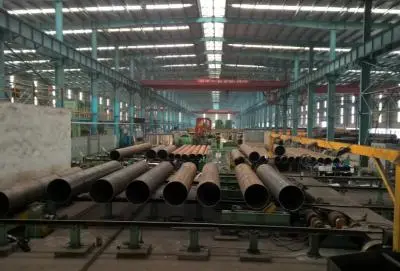
Longma Group has been making high-quality products for more than 20 years and is now working on global pipeline projects that need to control the wall thickness precisely in medium-pressure situations. As a certified ISO 3183 L320 pipe maker, we keep full production records from where we get our raw materials to when we check the finished product to make sure it meets or exceeds the requirements. Our state-of-the-art LSAW and ERW production lines, which are certified to API 5L standards and have automatic UT inspection systems, consistently produce high quality across order amounts of more than 1,000,000 tons per year.
Our full documentation packages include Material Test Certificates, Inspection and Test Plans, and Manufacturing Procedure Specifications. These are useful for engineering contractors and procurement managers working on natural gas gathering systems, water transmission networks, or building offshore platforms. Our expert team works closely with clients to find the best specs that balance performance needs with the cost of the project. Get in touch with info@longma-group.com to talk about your future ISO 3183 L320 pipe needs with experienced application engineers who know how important wall thickness tolerance is for the long-term stability of pipelines.