
ISO 3183 L245 pipe demonstrates exceptional field welding performance thanks to its low-carbon composition and controlled metallurgy. With a minimum yield strength of 245 MPa and a maximum carbon content of 0.28%, this grade offers outstanding weldability without requiring extensive preheating or complex post-weld treatments. The material's excellent plasticity and toughness allow seamless joining using standard welding techniques, making it a preferred choice for EPC contractors managing oil and gas pipeline projects in variable environmental conditions. Its balanced mechanical properties ensure consistent weld integrity while maintaining cost-effectiveness across diverse project applications.
|
|
|
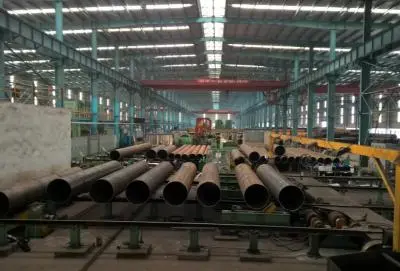
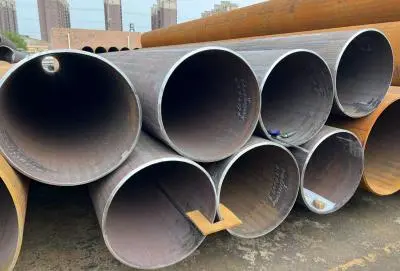
Understanding ISO 3183 L245 Pipe and Its Welding Characteristics
Knowing the object you're working with is the most important part of field welding. ISO 3183 L245 pipe is made of low-carbon plain carbon steel and was designed to be used in systems that move oil and natural gas. This grade is the same as API 5L Grade B in terms of its technical qualities. It also meets international metric standards, which means it can be used for projects around the world.
Chemical Composition and Metallurgical Properties
The way L245 pipe welds is directly affected by the properties of its material. This grade doesn't have the more expensive microalloy elements found in higher-strength pipes because it only has 1.20% manganese and 0.28% carbon. The purposely simple chemistry has two important benefits: there is almost no chance of the weld breaking, and cooling rates don't need to be controlled as closely. When our welding engineers heat the pipe to join sections together on the job site, the low carbon equivalent makes sure that the heat-affected zone stays flexible instead of brittle. This is very important when the temperature outside isn't as stable as it is in the factory.
Mechanical Properties Across PSL Levels
Knowing the levels of standard helps buying teams match the performance of materials to the needs of the project. The minimum yield strength in PSL 1 is set at 245 MPa, the minimum tensile strength is set at 415 MPa, and the minimum stretch is set at 22%. These features make it tough enough for welding jobs that happen in the field, where mechanical stress happens during handling and installation.
The PSL 2 specifications make controls a lot stricter. You can stretch it between 415 and 655 MPa, and it can give between 245 and 440 MPa. The yield-to-tensile ratio is limited by PSL 2, low-temperature impact testing is required, and hardness is limited to ≤ 250 HV. These stricter requirements make sure that the welds will do what they're supposed to do and that the joints will last longer. This is especially helpful when third-party inspectors check your welds against strict owner specifications.
Surface Preparation and Dimensional Precision
It's very important to prepare the surface properly before welding. Even small amounts of mill scale, oil residue, or moisture can cause problems in the weld pool. The measurements allowed by ISO 3183 make sure that the different parts of the pipe always fit together correctly, which lowers the chance of root gaps that lead to incomplete penetration. Field crews spend less time grinding and more time making quality welds when procurement managers buy from certified manufacturers who keep tight control over dimensions.
Common Challenges in Field Welding of ISO 3183 L245 Pipes
When welding in the field, there are problems that don't happen in a controlled factory setting. When proper procedures aren't followed, ISO 3183 L245 pipe defects can happen because of changes in the environment, problems with logistics, and tight deadlines. When project teams are aware of these problems, they can take preventative steps instead of making fixes after the fact.
Environmental Factors and Contamination Risks
Changes in temperature have a big effect on welding parameters. If a procedure is qualified at 20°C, it might not work the same way at 5°C or 35°C. Hydrogen is added to the weld metal by humidity, which makes it more likely to crack later. Wind speeds up the cooling process, which could make hard spots in the heat-affected area. Shielding gas gets dirty from dust and other flying particles, which causes cavities. These factors get worse in faraway places that are hard to control, like job sites in the Middle East that are in the desert or wet tropical areas in Southeast Asia.
Common Weld Defects and Their Causes
Porosity happens when gas gets stuck in metal that is forming during welding. This can happen because the surfaces are dirty or there isn't enough protection. There are different kinds of cracks, such as hot cracks that happen during solidification, cold cracks that happen hours after welding because of hydrogen, and stress-relief cracks that happen during service. When the base metal doesn't fully melt and bond with the filler metal, this is called incomplete fusion. It creates internal flaws that can't be seen. Each type of defect puts the pipeline's integrity and project deadlines at risk.
Even though knowing that L245's low-carbon chemistry makes it less likely to crack doesn't completely remove the risk. Even materials that are easy to work with can have flaws introduced by bad welding technique, contaminated consumables, or inadequate joint preparation. Rejected welds, repair costs, and schedule delays are all bad for business and make it worth investing in proper procedures and welder qualification.
Operational Risks and Project Implications
Problems keep happening when field welds aren't done right. If a pipeline fails a hydrotest, it has to be dug up, fixed, and tested again, which can take days or weeks and is part of the critical path timeline. Leaks during launching slow down the production of money and could be against the law when it comes to the environment. When representatives of the owner see repeated weld failures, they may question the contractor's quality systems. This can lead to stricter inspections that slow things down even more. Setting up strong field welding processes protects both the asset and the image of the project.
Best Practices for Field Welding ISO 3183 L245 Pipes
Field welding that works well requires following the right steps, hiring skilled workers, and keeping a close eye on quality. These steps turn L245's natural ability to be welded into uniform, code-compliant joints that can be inspected by a third party.
Welding Procedures and Technique Selection
There are different ways to weld L245 pipe, and each has its own benefits. Shielded Metal Arc Welding (SMAW) is still popular because it is easy to use and doesn't get damaged by wind. All you need are some basic power sources. Gas Tungsten Arc Welding (GTAW) makes clean root passes and has great control, but because it deposits metal more slowly, it can only be used on important joints. Flux-Cored Arc Welding (FCAW) is a method that balances speed and quality. It works especially well for thick-wall applications with big diameters that are typical in EPC projects.
Managing the factors of the welding process ensures consistency, no matter which method is chosen. ISO 3183 L245 pipe doesn't need much preheating—usually 50–75°C at room temperature—but interpass temperature limits stop too much heat from going in and making the grain structure rougher. When figuring out heat input, voltage, amperage, and travel speed are all taken into account. This keeps the balance between enough penetration and not damaging the metal. Welding Procedure Specifications (WPS) that have been tested and approved list these factors, giving field teams tried-and-true ways to be successful.
Filler Metal Selection and Compatibility
Using the right filler metal makes sure that the weld metal and base metal can be used together without any problems. For SMAW uses, AWS E6010 and E7018 electrodes are the same strength and make-up as L245. Gas Metal Arc Welding (GMAW) and GTAW both use ER70S-6 wire, which leaves clean layers with little slag. The mechanical qualities of the filler metal should be the same as or slightly higher than the strength of the base metal while still being ductile. If the strength is too high without enough hardness, the joints will be weak and likely to crack.
In the field, storage for consumables is very important. When electrodes are exposed to air, they take in water, which adds hydrogen to the bonds. Keeping things in heated rod ovens in the right way, especially in coastal or tropical areas, keeps them from getting dirty. Documentation that links consumables to individual heats makes people responsible when problems are found during review.
Post-Weld Treatment and Inspection Protocols
Non-destructive testing (NDT) checks the integrity of the weld without hurting the pipe. Ultrasonic testing (UT) and radiographic testing (RT) can find problems inside that can't be seen from the outside. Usually, EPC projects call for a full volumetric inspection of all circumferential welds to make sure that every joint meets the requirements for acceptance before they are buried or coated. Visual inspection finds surface flaws like undercuts, too much strengthening, or cracks that need to be fixed right away.
Post-weld heat treatment (PWHT) loosens up any remaining stresses and softens up any hard spots in the heat-affected area. Because L245 has a low carbon load, it doesn't usually need PWHT. However, owner standards or bad service may mean that stress relief is needed. Using calibrated instruments to record treatment temperatures and hold times meets audit requirements and makes sure that metallurgical goals are met.
Conclusion
The low-carbon metallurgy, controlled mechanical qualities, and good ductility of ISO 3183 L245 pipe make it a safe choice for field welding. Understanding how the material welds, being aware of common problems in the field, and following tried-and-true methods are all things that EPC workers can do to regularly make good joints. By comparing L245 to other grades, it becomes clear when its low cost and ease of use make it a better choice for a project than options with higher strengths. When you work with certified sellers who offer full paperwork, technical support, and reliable delivery, buying materials goes from being a transactional necessity to a strategic project advantage that helps you meet deadlines and ensures quality.
FAQ
What is the difference between ISO 3183 L245 Pipe and API 5L Grade B?
Different standard systems agree that these names refer to the same materials. The international metric standard is met by ISO 3183 L245, and the American Petroleum Institute's specification is met by API 5L Grade B. The minimum mechanical qualities of both are the same: 245 MPa yield strength, 415 MPa tensile strength, and 22% stretch. Depending on where the project is located and what the owner wants, the specifications may use either standard, but the physical material will still work the same way.
Can ISO 3183 L245 Pipe be used for sour gas service?
Without extra training, standard L245 pipe is not suitable for sour service that contains hydrogen sulfide. Materials with a "S" suffix (L245NS) that meet Annex H standards for sulfide stress cracking protection are needed for sour service uses. This specification calls for controlled chemistry, more testing, and proof that the product can be used in places where hydrogen embrittlement is a risk.
Is welding ISO 3183 L245 Pipe difficult?
L245 is one of the easiest types of pipeline to weld because it has little carbon and easy chemistry. Standard welding methods, like GMAW, SMAW, and FCAW, create good results without requiring a lot of heating or complicated processes after the join. First-pass acceptance rates of over 95% are common for qualified welders who follow approved procedures. This makes L245 perfect for projects that put both quality assurance and schedule predictability first.
Partner with Longma Group for Your ISO 3183 L245 Pipe Requirements
Choosing the right ISO 3183 L245 pipe supplier has a direct effect on how well your project welds, how well it stays on schedule, and how well it stays within budget. Since 2003, Longma Group has been making high-quality ERW and LSAW steel pipes and sending more than 1,000,000 tons of them to EPC companies in more than 90 countries every year. Our full certifications (API 5L PSL2, ISO 9001, ISO 3183), along with our full documentation packages (ITP, MPS, MTC), make it easier for you to get approvals and pass third-party audits. We only get our raw materials from trustworthy mills like Shagang, TISCO, and Bao Steel. This way, we can be sure that the metal will weld evenly at all temperatures. Our technical team gives advice on how to weld, helps with troubleshooting in the field, and offers fast seven-day delivery options that keep your critical path schedule safe. Longma Group has the quality, service, and dependability that your projects need, whether you need to buy API 5L Grade B pipe or ISO 3183 L245 pipe. Get in touch with us right away at info@longma-group.com to talk about your needs with our skilled sourcing experts.