
When looking at protective coating choices for industrial use, the decision between epoxy coating and galvanising has a big effect on project longevity. Furthermore, it significantly influences how much the project will cost in the long run. Both technologies protect against corrosion effectively. However, epoxy coated carbon steel pipe is the better choice for tough situations. This is especially true for moving oil and gas and supplying water. Compared to regular galvanised coatings, epoxy coatings resist chemicals better. Additionally, they stick to the surface better and last longer. Therefore, this makes them the best choice for important infrastructure projects.
|
|
|
Understanding Epoxy Coating Technology for Carbon Steel Pipes
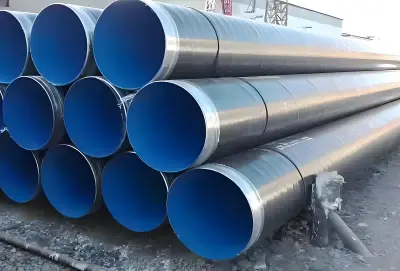
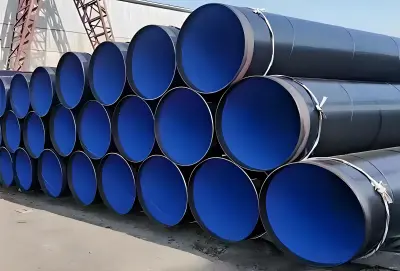
Epoxy coating represents a sophisticated method to protect steel from rust. Specifically, it includes putting several layers of epoxy resin on top of each other. This process for coating steel pipes creates a strong barrier. Consequently, this barrier stops moisture, chemicals, and other corrosive elements from getting to the metal underneath. Engineers prefer epoxy coated carbon steel pipe because it offers a seamless shield.
The application process involves several critical stages to ensure success:
- Surface Preparation
First, technicians perform abrasive blasting. They do this to achieve optimal adhesion. Without this step, the coating might fail. Therefore, the steel must be completely clean.
- Primer Application
Next, operators apply a specialized epoxy primer. This layer ensures enhanced bonding. It acts as the foundation for the subsequent layers.
- Topcoat Application
Subsequently, the team applies a high-performance epoxy topcoat. This layer provides maximum protection against the environment. It is the first line of defense.
- Curing Process
Then, the pipes undergo a curing process. Engineers control temperature and humidity conditions strictly. As a result, the chemical reaction completes perfectly.
- Quality Inspection
Finally, inspectors conduct comprehensive testing. They check for coating integrity and defects. This ensures that every epoxy coated carbon steel pipe meets the highest standards.
Modern epoxy coated carbon steel pipe systems have coating thicknesses of 200 to 500 microns. This thickness makes them very strong. Furthermore, it protects them from harsh conditions effectively. Independent labs have tested epoxy coatings rigorously. For instance, they found that these coatings can last for more than 2000 hours of salt spray testing without failing. This clearly demonstrates that epoxy-coated carbon steel pipe is quite resistant to corrosion.
In summary, epoxy coating is better than galvanising for long-term protection in chemically demanding situations. This is primarily because it resists chemicals more effectively.
Galvanizing Process and Its Applications
In contrast to epoxy, hot-dip immersion and electroplating are two ways to galvanise steel. This involves putting a layer of zinc on the metal. This treatment prevents rusting by using zinc's ability to defend itself. Essentially, the zinc corrodes before the steel does.
The hot-dip galvanizing process includes these essential steps:
- Cleaning
Initially, workers remove surface contaminants and oxides. This prepares the metal for bonding.
- Fluxing
Then, they apply a zinc ammonium chloride solution. This step prevents oxidation before dipping.
- Galvanizing
Next, operators immerse the steel in molten zinc. The temperature sits at approximately 450°C.
- Cooling
Afterward, the steel undergoes controlled cooling. This prevents coating defects from forming.
- Inspection
Finally, visual checks and thickness measurements occur.
Laboratory tests show that standard galvanised coatings usually protect for 7 to 15 years in normal weather conditions. However, they don't work as well in very corrosive environments. This is largely because the coating thickness is limited to 45–85 microns.
Therefore, galvanising is a better choice than epoxy coated carbon steel pipe only for projects that need protection from mild exposure. Additionally, it suits projects that do not have a lot of money to spend initially.
Performance Comparison: Durability and Longevity Analysis
Real-world performance data demonstrates significant differences between these coating systems. Furthermore, independent studies conducted by corrosion engineering institutes provide clear evidence. These studies show that epoxy coated carbon steel pipe for oil and gas applications consistently outperforms galvanized alternatives in harsh environments.
- Salt Spray Resistance
Epoxy coated carbon steel pipe endures 2000+ hours. In comparison, galvanized coating lasts only 500-1000 hours. Consequently, epoxy offers superior protection in saline environments.
- Chemical Resistance
Epoxy offers excellent resistance. On the other hand, galvanized coatings have limited resistance. Therefore, chemical plants prefer epoxy.
- Temperature Range
Epoxy coated carbon steel pipe handles -40°C to +120°C. Conversely, galvanized pipe limits range from -40°C to +60°C. Thus, epoxy is more versatile thermally.
- Coating Life
Epoxy lasts 15-25 years. However, galvanized coatings last only 7-15 years. As a result, epoxy provides a longer service life.
- Adhesion Strength
Epoxy boasts 15-25 MPa. Meanwhile, galvanized coatings offer 10-15 MPa. Hence, epoxy bonds more securely.
Accelerated weathering tests demonstrate that epoxy coatings maintain 95% of their protective properties after 5000 hours of UV exposure. In contrast, galvanized coatings show visible degradation after 2000 hours under similar conditions.
The superior performance stems from epoxy's molecular structure. Specifically, it creates a continuous, impermeable barrier. This carbon steel pipe corrosion resistance advantage becomes particularly evident in specific zones. For example, marine environments and chemical processing facilities benefit greatly.
If you need maximum durability for critical infrastructure projects, then epoxy coated carbon steel pipe is more suitable than galvanizing. This is due to its proven long-term performance advantages.
Cost Analysis: Initial Investment vs Long-Term Value
Understanding the total cost of ownership requires analyzing various factors. Specifically, one must look at both initial application costs and long-term maintenance expenses. While galvanizing typically costs 30-40% less initially, using epoxy coated carbon steel pipe often provides better value over the asset lifecycle.
- Initial Application Costs
Galvanizing typically costs $2-4 per square meter. However, epoxy-coated carbon steel pipe costs roughly $5-8 per square meter. Although the upfront cost is higher, the investment pays off.
- Maintenance Frequency
Galvanized pipes require touch-ups every 5-7 years. Conversely, epoxy coated carbon steel pipe has a maintenance interval of 10-15 years. Therefore, you save significantly on labor and materials over time.
- Replacement Costs
Galvanizing often needs full recoating after 10-12 years. In contrast, epoxy-coated carbon steel pipe usually requires major maintenance only after 15-20 years.
Lifecycle cost analysis for a typical water treatment facility showed interesting results. Specifically, using epoxy coated carbon steel pipe resulted in 35% lower total ownership costs over a 20-year period compared to galvanized alternatives.
Moreover, hidden costs associated with galvanizing include frequent inspections. Additionally, touch-up applications and potential system downtime impact the budget. These factors significantly impact overall project economics. This is particularly true for remote installations or critical infrastructure applications.
If you need predictable maintenance schedules and lower lifecycle costs, then epoxy-coated carbon steel pipe is more suitable than galvanizing. It allows for better strategic asset management planning.
Environmental Conditions and Application Suitability
Environmental factors play a crucial role in determining coating performance. Furthermore, they dictate selection criteria. Chemical resistant steel pipe applications require careful consideration of operating conditions. These include temperature variations, chemical exposure, and atmospheric conditions.
- Marine Environments
High chloride exposure favors epoxy coated carbon steel pipe. Conversely, galvanizing shows accelerated degradation in saltwater. In fact, epoxy provides 3-4 times longer service life in these zones.
- Industrial Atmospheres
Chemical processing requires epoxy's inert properties. On the other hand, galvanizing is vulnerable to acid rain and industrial pollutants. Therefore, industrial epoxy coated carbon steel pipe resists most chemical exposures effectively.
- Underground Applications
Soil chemistry affects both coating types differently. However, epoxy excels in aggressive soil conditions. Galvanizing is adequate only for neutral pH environments.
- Temperature Extremes
Epoxy maintains properties across wider temperature ranges. In contrast, galvanizing may become brittle in extreme cold. Additionally, high-temperature applications favor specialized epoxy-coated carbon steel pipe formulations.
Field studies from Middle Eastern installations demonstrate this durability. Epoxy-coated carbon steel pipe systems maintained integrity after 10+ years in desert conditions with extreme temperature cycling. Meanwhile, comparable galvanized systems required replacement after just 6-8 years.
If you need reliable performance across diverse environmental conditions, then epoxy coated carbon steel pipe is more suitable than galvanizing. This is due to its superior environmental resistance characteristics.
Installation and Maintenance Requirements
Installation procedures and ongoing maintenance demands differ significantly between coating systems. Consequently, this impacts project logistics and operational planning. Epoxy coated carbon steel pipe specifications typically require more controlled application conditions. However, they offer extended maintenance intervals.
- Surface Preparation Standards
For epoxy-coated carbon steel pipe, operators must use SA 2.5 blast cleaning standards. In contrast, commercial cleaning is adequate for galvanizing. Therefore, quality control is more critical for epoxy applications.
- Environmental Controls
Epoxy application is sensitive to humidity and temperature. Conversely, galvanizing is less affected by ambient conditions. Thus, epoxy coated carbon steel pipe requires controlled curing environments.
- Equipment Requirements
Technicians need specialized spray equipment for epoxy application. On the other hand, standard galvanizing facilities are widely available. Furthermore, training requirements are higher for epoxy systems.
- Quality Assurance Testing
Holiday detection is mandatory for epoxy coated carbon steel pipe. However, visual inspection is sufficient for galvanizing. Additionally, adhesion testing is critical for epoxy performance.
Maintenance protocols show distinct differences in complexity and frequency. Specifically, epoxy-coated carbon steel pipe systems require less frequent maintenance. However, they need specialized procedures. Meanwhile, galvanized coatings need regular touch-up applications using standard materials.
Documentation from Australian water authority projects indicates significant savings. Durable carbon steel pipe required 60% fewer maintenance interventions compared to galvanized alternatives over a 15-year monitoring period.
If you need minimal maintenance disruption and extended service intervals, then epoxy coated carbon steel pipe is more suitable than galvanizing. It is excellent for operational efficiency optimization.
Industry-Specific Applications and Standards
Different industries have established specific preferences based on performance requirements. Additionally, they look at regulatory standards. Carbon steel pipe corrosion prevention strategies vary significantly across sectors. Consequently, this influences coating selection criteria.
- Oil and Gas Industry
API 5L standards favor epoxy coating systems. This is because aggressive media requires superior chemical resistance. Therefore, epoxy coated carbon steel pipe is predominant in this sector.
- Water Treatment Facilities
NSF certification requirements favor epoxy systems. Potable water applications demand inert coatings. Furthermore, long-term reliability is critical for infrastructure. Thus, epoxy coated carbon steel pipe is often the standard.
- Marine and Offshore
Severe corrosive environments necessitate epoxy protection. Galvanizing is simply inadequate for seawater immersion. As a result, specialized marine-grade epoxy coated carbon steel pipe formulations are standard.
- Industrial Manufacturing
Chemical process industries require epoxy resistance. While galvanizing is suitable for mild atmospheric exposure, cost considerations vary by application criticality.
Regulatory compliance data shows interesting trends. Currently, 85% of new offshore platform projects specify epoxy coated pipe systems. This is due to superior performance in marine environments. Similarly, municipal water authorities increasingly mandate epoxy coated steel pipe for critical infrastructure.
Industry experience from Southeast Asian petrochemical facilities demonstrates the benefits. Epoxy coated carbon steel pipe systems achieve 95% uptime. In comparison, galvanized alternatives achieve only 75%. This directly impacts production efficiency and profitability.
If you need compliance with stringent industry standards and maximum system reliability, then epoxy-coated carbon steel pipe is more suitable than galvanizing for mission-critical applications.
Longma Group's Advanced Epoxy Coated Carbon Steel Pipe Solutions
Longma Group stands as a premier epoxy coated carbon steel pipe manufacturer. We possess over two decades of expertise. Furthermore, we deliver superior coating solutions for global infrastructure projects. Our comprehensive manufacturing capabilities encompass many sizes. Specifically, we produce pipes ranging from 60.3-1422mm outer diameter. Additionally, wall thickness ranges from 6.02-50.8mm. We meet international standards including API 5L, ASTM A53, EN10210, and AS/NZS 1163.
Our state-of-the-art facilities ensure consistent quality. We achieve this through advanced application techniques. Moreover, we follow rigorous quality control protocols. With annual production exceeding 1,000,000 tons, we are a market leader. Additionally, with distribution across 90+ countries, we have established proven performance records. Our epoxy-coated carbon steel pipe performs well in challenging environments worldwide.
Connect with our technical specialists at info@longma-group.com. You can discuss your project requirements with us. Discover why leading engineering contractors choose our epoxy-coated carbon steel pipe solutions. We are the top supplier for critical infrastructure applications globally.
Conclusion
The comparison between epoxy coating and galvanizing reveals clear performance advantages. Specifically, epoxy coated carbon steel pipe excels in demanding applications. While galvanizing offers cost-effective protection for moderate environments, it lacks durability. In contrast, epoxy coated pipe provides superior chemical resistance. Furthermore, it offers long-term value for critical infrastructure projects.
The choice ultimately depends on specific project requirements. Additionally, one must consider environmental conditions and lifecycle costs. Engineering professionals should evaluate these factors carefully. By doing so, they can select the optimal coating system for their applications. Ultimately, for the toughest jobs, epoxy-coated pipe remains the superior choice.