
When working with ASTM A53 ERW pipe projects, understanding filler metal requirements becomes crucial for project success. Generally, ASTM A53 ERW pipe welding may or may not require filler metal. This situation depends largely on the specific welding technique employed. Furthermore, the joint configuration plays a significant role. The original Electric Resistance Welding (ERW) process used to manufacture these pipes creates a seamless longitudinal weld. Notably, this specific manufacturing step occurs without filler metal. However, joining pipe sections or connecting fittings in field applications is different. For instance, welding processes like TIG, MIG, or stick welding often require appropriate filler metals. Consequently, you achieve proper joint strength and integrity.
|
|
|
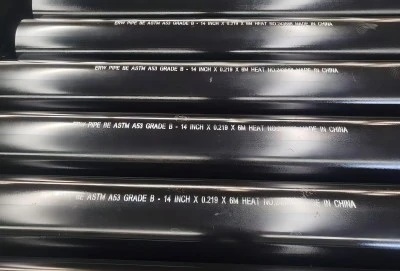
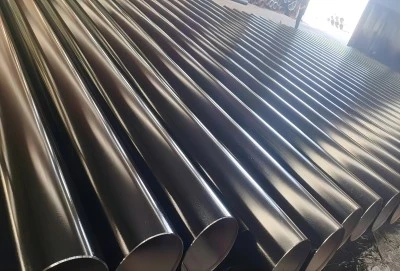
Understanding ASTM A53 ERW Steel Pipe Welding Basics
Electric Resistance Welded steel pipes represent a cornerstone of modern industrial infrastructure. Primarily, they offer consistent dimensional accuracy. Additionally, they provide cost-effective solutions across numerous applications. The manufacturing process creates these pipes through high-frequency resistance welding. Specifically, the process heats steel strip edges. Then, it forges them together under pressure. As a result, this forms a continuous longitudinal seam without additional materials.
Manufacturing Process and Weld Characteristics
The ERW manufacturing process generates unique metallurgical properties. These properties significantly influence subsequent welding operations. During production, the steel strip undergoes controlled heating at approximately 2500°F. Consequently, this creates a forge weld that exhibits grain refinement along the seam. This process results in a weld zone with superior mechanical properties. Often, these properties exceed those of the base material. Therefore, ASTM A53 ERW pipe is particularly suitable for structural and pressure applications.
Understanding these characteristics helps procurement professionals. Specifically, they can recognize why ERW pipes often perform exceptionally well in welded assemblies. Moreover, the refined grain structure provides predictable welding behavior. Similarly, the consistent wall thickness reduces the risk of defects. Thus, this ensures reliable joint performance across various industrial applications.
Welding Techniques and Filler Metal Requirements
Different welding processes interact uniquely with ERW pipe materials. As a result, this creates varying filler metal requirements. For example, Gas Tungsten Arc Welding (GTAW) typically produces the highest quality joints. However, it may require filler metal for gap bridging or reinforcement. In contrast, Gas Metal Arc Welding (GMAW) inherently uses consumable electrodes. These electrodes serve as filler material. Therefore, this makes it efficient for production welding scenarios.
Shielded Metal Arc Welding (SMAW) remains popular for field applications. This popularity is largely due to its versatility and wind resistance. Additionally, the flux-coated electrodes provide both filler metal and shielding gas. This feature simplifies the welding process. Simultaneously, it maintains joint quality. Ultimately, each technique offers distinct advantages depending on project requirements. Furthermore, environmental conditions and quality specifications dictate the best choice.
ASTM A53 ERW Pipe Specifications Affecting Welding Practices
Chemical composition plays a fundamental role in determining weldability. Moreover, it dictates filler metal compatibility for Grade B steel pipes. The standard specifies a maximum carbon content of 0.30%. This specification creates excellent weldability characteristics. Consequently, it minimizes preheating requirements. Furthermore, it reduces susceptibility to heat-affected zone cracking. Finally, the controlled chemistry ensures predictable welding behavior across different manufacturers.
Mechanical Properties Impact on Welding
The mechanical properties of Grade B material directly influence welding parameters. Additionally, they affect filler metal selection. These pipes possess a minimum yield strength of 35,000 psi. Also, they have a tensile strength of 60,000 psi. Therefore, ASTM A53 ERW pipe requires filler metals with matching strength characteristics. Alternatively, slightly overmatching strength characteristics help maintain joint integrity. Moreover, the ductility and toughness properties ensure excellent performance. This is vital under dynamic loading conditions common in pipeline applications.
Wall thickness variations occur from Schedule 10 through Schedule XXS. These variations create different heat input requirements. Furthermore, they affect cooling rates during welding. Thicker sections may necessitate preheating. Sometimes, they require post-weld heat treatment to prevent cracking. In contrast, thin-wall applications require careful heat management. This prevents burn-through or distortion. Thus, understanding these relationships helps engineers specify appropriate welding procedures.
Dimensional Considerations for Weld Design
Pipe diameter ranging from 1/8" NPS to 26" creates diverse welding challenges. Additionally, it offers unique opportunities. Small diameter pipes often require specialized fixturing. Moreover, they need precise heat control to maintain roundness. This control prevents distortion. On the other hand, large diameter applications may benefit from multi-pass welding techniques. These techniques distribute heat input effectively. Consequently, they minimize residual stresses throughout the joint.
The standardized dimensions of ERW pipes facilitate consistent fit-up. Likewise, tight tolerances allow for better gap control. These are critical factors in achieving high-quality welded joints. Proper fit-up reduces the need for excessive filler metal. Furthermore, it ensures complete penetration. Thus, fusion occurs throughout the joint cross-section.
Procurement Considerations for ASTM A53 ERW Pipes in Welding Applications
Supplier certification significantly impacts welding performance. Furthermore, quality management systems influence project success rates. Reputable manufacturers maintain strict chemistry control. Additionally, they ensure tight dimensional tolerances. These factors directly translate to improved weldability. Moreover, they lead to reduced defect rates. Mill test certificates provide essential documentation. Specifically, they are vital for welding procedure qualification and quality assurance programs.
Supply Chain Integration and Project Planning
Successful procurement strategies integrate material delivery schedules with fabrication timelines. This integration optimizes welding operations. Additionally, it minimizes handling costs. Bulk purchasing of compatible pipe grades and sizes reduces inventory complexity. Simultaneously, it ensures consistent welding behavior throughout the project. Coordinating with suppliers on cut-to-length services can also help. Similarly, end preparation services significantly reduce field welding time. As a result, joint quality improves.
The availability of technical support adds substantial value. Specifically, support from experienced manufacturers aids procurement decisions. Access to welding engineers helps resolve field issues quickly. Furthermore, metallurgists provide guidance on procedure optimization. This support becomes particularly valuable for international projects. Often, local expertise may be limited in those regions.
Cost Analysis and Budget Planning
Understanding the total cost of welded pipe systems is complex. For instance, it requires consideration of material costs. Additionally, you must factor in welding consumables and labor rates. Finally, quality assurance expenses play a major role. Grade B material typically offers the best value proposition. This applies to general applications. It provides adequate strength and excellent weldability at competitive prices. Furthermore, the simplified welding procedures reduce training requirements. Thus, productivity improves compared to higher-grade alternatives.
Filler metal costs represent a significant portion of total welding expenses. Therefore, compatibility and efficiency are important selection criteria. Standard filler metals like ER70S-6 work well for GMAW applications. Similarly, E7018 is excellent for SMAW. These options provide excellent performance at reasonable costs. However, specialty filler metals may be required for specific applications. In these cases, you should evaluate them carefully for cost impact and availability.
Best Practices and Recommendations for Welding ASTM A53 ERW Pipes
Determining when filler metal is essential requires careful evaluation. You must consider joint design and loading conditions. Additionally, service requirements are a key factor. Butt joints in pressure applications typically require complete penetration welds. Therefore, they need matching filler metals to ensure adequate strength. This also ensures leak-tight performance. In contrast, structural connections may utilize partial penetration welds. Alternatively, fillet welds work well with reduced filler metal requirements. Nevertheless, they maintain adequate load capacity.
Advanced Welding Techniques and Quality Enhancement
Modern welding techniques offer opportunities to optimize joint performance. Simultaneously, they minimize filler metal consumption. Narrow gap welding processes reduce filler metal requirements. Surprisingly, they can reduce usage by up to 50% compared to conventional techniques. Furthermore, they maintain equivalent strength properties. Automated welding systems improve consistency. Additionally, they reduce labor costs. This is particularly beneficial for repetitive fabrication operations.
Pre-weld cleaning significantly impacts joint quality. Moreover, preparation affects filler metal effectiveness. Proper removal of mill scale is essential. Likewise, you must remove oil and contaminants. This ensures good fusion and minimizes porosity risks. Post-weld treatments like stress relief may be required. This is true for critical applications. For example, those involving thick sections or complex geometries often need normalization.
Troubleshooting Common Welding Issues
Incomplete fusion represents one of the most common defects in ASTM A53 ERW pipe welding. Often, this results from inadequate heat input. Alternatively, poor joint preparation causes the issue. Adjusting welding parameters typically resolves these issues. Furthermore, ensuring proper fit-up helps significantly. Usually, you do not require exotic filler metals to fix this. Porosity problems usually stem from contamination or moisture. Therefore, proper storage and handling procedures are important.
Cracking issues may indicate incorrect filler metal selection. Furthermore, they could suggest inadequate preheating procedures. Heat-affected zone cracking is a serious concern. However, it can often be prevented through controlled cooling rates. Additionally, appropriate filler metal chemistry helps. Understanding these relationships helps welding engineers. Consequently, they can develop robust procedures. This minimizes defect rates and rework requirements.
Longma Group: Your Trusted ASTM A53 ERW Pipe Manufacturer
Longma Group stands as a leading manufacturer of high-quality ERW steel pipes. We offer comprehensive solutions for global industrial applications. Our extensive experience in pipe manufacturing since 2003 establishes us as a reliable partner. We serve engineering contractors and procurement professionals worldwide. Moreover, we have an annual production capacity exceeding 1,000,000 tons. We also have coverage across 90 countries. Therefore, we understand the critical importance of consistent quality. Furthermore, we prioritize reliable supply chains.
Quality Assurance and Technical Excellence
Our manufacturing facilities utilize advanced quality control systems. These systems ensure every ASTM A53 ERW pipe meets Grade B specifications. Alternatively, they exceed them. The integration of sophisticated inspection equipment is key. Additionally, rigorous testing protocols guarantee dimensional accuracy. These metallurgical properties are essential for successful welding applications. Our comprehensive certification portfolio demonstrates our commitment. For instance, we hold API 5L, ISO 9001, and various safety management systems certificates. This proves our regulatory compliance.
We source raw materials from premium domestic steel mills. This practice ensures consistent chemistry. Furthermore, it guarantees mechanical properties throughout our product range. Our heat treatment procedures provide additional assurance. Similarly, weld integrity testing confirms our quality. Thus, our ERW pipes will perform reliably in demanding welding applications. This applies across diverse industrial sectors.
Comprehensive Product Range and Services
Our inventory includes Grade B material in various sizes. Specifically, we range from 1/8" NPS to 26". We offer wall thicknesses from Schedule 10 through Schedule XXS. Standard lengths of 3-12.5 meters accommodate most project requirements. However, custom cutting services provide additional flexibility. We maintain 200-300 tons of stock inventory. Additionally, we have 7+ day delivery capabilities. As a result, we ensure project schedules remain on track. We do this without compromising quality standards.
Beyond standard pipe supply, we offer fabrication services. These include welding preparation and end treatments. Additionally, anti-corrosion coatings provide complete solutions for complex projects. Our technical support team offers expert guidance. For example, they advise on welding procedures and filler metal selection. Furthermore, they help with quality assurance programs. This maximizes project success rates. Finally, it minimizes costs and delays.
Conclusion
The question of whether ASTM A53 ERW pipe welding requires filler metal depends on several factors. Primarily, it depends on the specific welding application. Additionally, joint design requirements play a role. The original ERW manufacturing process creates pipes without filler metals. However, field welding operations typically require appropriate consumables. This is necessary to achieve proper joint strength and integrity. Understanding the relationship between pipe specifications and welding techniques is key. Furthermore, filler metal selection enables procurement professionals to make informed decisions. These decisions optimize both performance and cost-effectiveness. The excellent weldability characteristics of Grade B material make these pipes ideal. Moreover, standardized dimensions and consistent quality add to their value. Therefore, they are perfect for diverse industrial applications where reliable welded connections are essential.
Partner with Longma Group for Superior ASTM A53 ERW Pipe Solutions
Longma Group delivers exceptional quality and reliability. We are your preferred ASTM A53 ERW pipe supplier. We combine decades of manufacturing expertise with comprehensive technical support services. Our certified production facilities ensure quality. Additionally, our extensive inventory ensures your welding projects receive optimal materials. These materials come with consistent performance characteristics. Furthermore, we offer reliable delivery schedules. With 200-300 tons of stock and rapid 7+ day delivery capabilities, we eliminate supply chain uncertainties. Often, these uncertainties can impact critical welding operations.
Our experienced technical team provides expert guidance. We help with filler metal selection and welding procedures. Moreover, we assist with quality assurance protocols to maximize your project success rates. Contact us at info@longma-group.com to discuss your specific requirements. Discover how our premium ERW pipes can enhance your welding applications. Ultimately, we can help reduce total project costs.
FAQ
Does ASTM A53 Grade B pipe always require filler metal for welding?ASTM A53 ERW pipe does not always require filler metal. This depends on the welding process and joint configuration. The original ERW manufacturing process creates the pipe without filler metal. However, field welding typically requires consumables. For example, ER70S-6 or E7018 electrodes help achieve proper joint strength and penetration.
What type of filler metal works best with ASTM A53 ERW pipes?
The most commonly used filler metals include ER70S-6 for gas metal arc welding. Additionally, E7018 works well for shielded metal arc welding. These provide matching strength properties. Furthermore, they offer excellent compatibility with the base material chemistry. The selection depends on the welding position. It also depends on joint design and specific project requirements.
How does pipe wall thickness affect filler metal requirements?
Thicker wall pipes generally require more filler metal volume. Moreover, they may need multi-pass welding techniques to achieve complete penetration. Schedule XXS pipes might require preheating. Additionally, they may need controlled cooling to prevent cracking. In contrast, thin-wall applications need careful heat management. This prevents burn-through.
Can galvanized ASTM A53 pipes be welded with standard filler metals?
Galvanized pipes require coating removal before welding. Furthermore, they may need specialized filler metals. These are designed to handle residual zinc contamination. Standard filler metals can be used after proper surface preparation. However, additional ventilation is essential. Also, safety precautions are necessary due to zinc fume generation.