
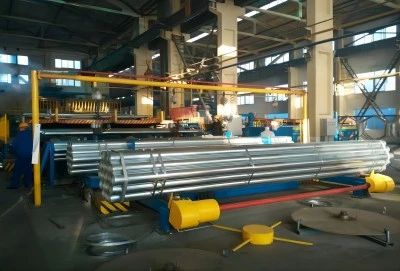
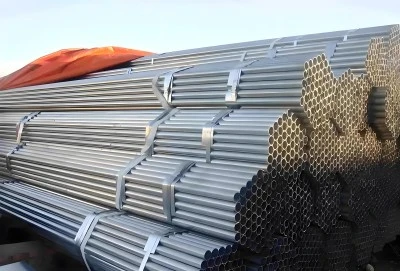
Finding the best galvanized mild steel pipe for water supply systems requires significant skill. It demands a deep understanding of both material science and application-specific requirements. Furthermore, engineers must analyze global standards carefully. They must also review field performance data and engineer feedback. After this analysis, clear trends emerge. The top choices consistently feature superior corrosion protection. Specifically, this protection comes through hot-dip galvanization processes. Consequently, a high-quality galvanized pipe delivers exceptional durability. These pipes serve well in municipal water systems and industrial applications. Additionally, they perform reliably in offshore installations while meeting stringent international standards.
|
|
|
Why Focus on Galvanized Mild Steel Pipes for Water Supply?
Water transportation demands specific materials. These materials must balance strength, durability, and economic viability effectively. Fortunately, the galvanized mild steel pipe excels in each of these areas. As a result, it becomes indispensable for modern infrastructure projects. Basically, the steel pipe galvanization process creates a strong metallurgical bond. This bond forms between zinc and steel. Therefore, it provides both barrier and sacrificial protection against corrosion.
Plant equipment managers specifically appreciate the versatility of these systems. Unlike some alternatives, a galvanized pipe does not require specialized handling. Moreover, it does not need complex installation techniques. Instead, galvanized steel pipe dimensions align perfectly with standard industry practices. This compatibility significantly reduces training requirements. Furthermore, it speeds up installation timelines. These are critical factors in large-scale engineering projects.
The anti-rust properties of a galvanized mild steel pipe become particularly valuable. This is vital in water supply applications. In these settings, system integrity directly impacts public health and safety. Unfortunately, corrosion byproducts can compromise water quality. Additionally, structural failures often create expensive emergency repairs. They also cause service interruptions. However, galvanized pipes olutions for plumbing have demonstrated consistent performance. This reliability spans across decades of service in municipal systems worldwide.
Selection Criteria for Superior Water Supply Pipes
Choosing the optimal galvanized mild steel pipe requires careful evaluation. You must assess multiple dimensions. These factors directly impact project success. Performance metrics extend beyond simple pressure ratings. In fact, they encompass long-term durability and installation requirements. Furthermore, engineers must consider lifecycle costs.
Material Compliance and Standards
First and foremost, material compliance forms the foundation of any quality assessment. A reliable galvanized mild steel pipe must meet established standards. For instance, these include ASTM A53, API 5L, and AS/NZS 1163. These specifications ensure consistent quality. They also guarantee predictable performance characteristics. Additionally, coating standards play a crucial role. Standards like DIN 30670 and AWWA C210 are essential. They guarantee adequate zinc coverage for effective corrosion protection.
Installation and Dimensions
Installation compatibility significantly influences project economics. Therefore, you should seek galvanized mild steel pipe suppliers who provide comprehensive dimension ranges. This availability enables engineers to optimize system designs. Consequently, they do not have to compromise on availability. Wall thickness options are also important. Ranges from 6.02mm to 50.8mm accommodate varying pressure requirements. At the same time, they maintain structural integrity.
Economic Factors
Finally, economic factors encompass more than just the purchase price. They include both initial procurement costs and long-term operational expenses. Admittedly, galvanized mild steel pipe price points may exceed some alternatives initially. However, the reduced maintenance requirements offer savings. Furthermore, the extended service life typically delivers a superior total cost of ownership. This economic advantage becomes even more pronounced in remote locations. In such areas, repair access presents significant logistical challenges.
Top Galvanized Mild Steel Pipe Solutions for Water Systems
Heavy-Duty Large Diameter LSAW Galvanized PipesLarge-diameter LSAW (Longitudinal Submerged Arc Welded) galvanized pipes represent the pinnacle of engineering. They are designed specifically for high-capacity water transmission systems. These pipes excel in demanding applications. For example, they handle substantial flow rates and exceptional pressure.
Manufacturing through the LSAW process creates superior weld integrity. This is an improvement compared to alternative joining methods. Specifically, the longitudinal welding technique produces consistent penetration. It also ensures strength characteristics along the entire seam length. This reliability becomes crucial in water supply systems. In such systems, a failure could impact thousands of users.
The hot-dip coating on an LSAW galvanized mild steel pipe provides exceptional corrosion resistance. The galvanization process ensures uniform zinc coverage. This covers the entire surface, including critical weld areas. Typically, corrosion initiates in these zones. Therefore, comprehensive protection extends service life significantly. This is particularly true in aggressive water chemistries.
Diameter ranges are extensive. They span from 508mm to 1422mm. Thus, they accommodate major transmission mains and distribution headers. Wall thickness options enable engineers to optimize designs. They can select for specific pressure classes while maintaining adequate safety margins. As a result, LSAW galvanized mild steel pipe options are ideal for municipal water systems. They also suit industrial process water and large-scale irrigation projects.
Quality control measures during manufacturing include comprehensive inspection protocols. For instance, non-destructive testing verifies weld integrity. Meanwhile, coating thickness measurements ensure adequate galvanization coverage. These quality assurance steps provide confidence. Engineering contractors working on critical infrastructure projects rely on this data.
Medium Diameter ERW Galvanized Steel Pipes
Alternatively, ERW (Electric Resistance Welded) galvanized steel pipes offer an optimal balance. They combine performance and economy for medium-scale water distribution systems. The manufacturing process creates reliable joints. Simultaneously, it maintains cost-effectiveness for projects with extensive linear footage requirements.
The electric resistance welding technique produces consistent seam quality. This consistency applies across varying wall thicknesses. Consequently, this enables predictable performance characteristics. Engineers can incorporate these stats confidently into system designs. Furthermore, the welding process minimizes material waste. This contributes positively to overall project economics.
Galvanized mild steel pipe durability in ERW products matches alternative manufacturing methods. This is true when manufacturers follow proper coating procedures. The zinc coating provides excellent adhesion to the smooth surface finish. This finish is typical of ERW manufacturing. This combination delivers long-term corrosion protection. Such protection is essential for water supply applications.
Dimensional ranges generally span from 60.3mm to 610mm outer diameter. This serves the majority of distribution and collection system requirements. Additionally, standard lengths reduce joining requirements. They also reduce installation time. Meanwhile, custom cutting accommodates specific project needs. These dimensional options provide flexibility. This is helpful for complex routing requirements common in urban water systems.
Compliance with multiple international standards ensures global acceptability. For example, ERW galvanized mild steel pipe products often meet ASTM A53 specs. They may also meet EN10210 and API 5L specifications. This provides procurement flexibility for international projects. This standardization simplifies documentation requirements. Moreover, it ensures consistent quality regardless of manufacturing location.
High-Pressure Galvanized Steel Tubing Systems
High-pressure applications demand specialized galvanized mild steel pipe tubing. These systems are engineered specifically for demanding service conditions. They incorporate enhanced wall thickness. Additionally, they feature premium coating specifications. This ensures reliable performance under extreme operating pressures.
Advanced heat treatment procedures strengthen the base material. However, they maintain ductility for field installation. The combination of controlled cooling rates and tempering temperatures optimizes mechanical properties. This is vital for pressure service. Furthermore, this metallurgical control ensures consistent performance across varying installation conditions.
Corrosion protection for a galvanized mild steel pipe in high-pressure configurations requires premium techniques. Enhanced zinc coating weights provide additional protection. This defends against aggressive water chemistries common in industrial applications. The coating uniformity becomes critical. This is because pressure-related stresses can accelerate corrosion at discontinuities.
Specialized galvanized pipe fittings complement these high-pressure systems. Matching galvanization specifications on fittings ensure uniform corrosion protection. This applies throughout the system. Furthermore, compatible expansion joints and valve connections maintain system integrity. They do this while accommodating thermal movement and pressure cycling.
Applications include offshore platform water systems and industrial process cooling. They also include high-rise building distribution. These demanding environments require robust materials. The materials must maintain integrity under both operational stresses and environmental exposure. Therefore, premium galvanized mild steel pipe tubing delivers the reliability these applications demand.
Global Market Analysis and Regional Considerations
International water infrastructure markets present diverse challenges. These challenges influence galvanized mild steel pipe selection. Regional climate conditions play a role. Additionally, water chemistry variations and local construction practices impact optimal product configurations.
Regional Specifics
Specifically, Middle Eastern markets emphasize corrosion protection. This is due to high salinity environments and elevated temperatures. Consequently, enhanced galvanization specifications become essential. They maintain long-term performance. Projects in this region often specify premium zinc coating weights. They also demand rigorous quality control measures.
Conversely, Australian applications focus on other factors. Major projects like MOBIL OIL AUSTRALIA installations prioritize seismic resistance. They also focus on environmental durability. The combination of coastal exposure and geological activity demands robust engineering solutions. Therefore, galvanized mild steel pipes pecifications must accommodate both corrosion protection and structural performance requirements.
Southeast Asian markets present unique challenges related to water chemistry. Installation conditions also differ here. High humidity environments accelerate corrosion processes. As a result, superior surface treatment becomes essential. Additionally, varying local standards require flexible compliance capabilities. Galvanized mild steel pipe coating methods must adapt to these rules.
Cultural and Logistic Factors
Cultural preferences and procurement practices vary significantly across global markets. Some regions emphasize long-term lifecycle costs. On the other hand, others prioritize initial capital investment. Understanding these preferences enables better alignment. It aligns product capabilities with customer priorities.
Local availability of galvanized mild steel pipe suppliers influences project logistics. It also affects economics. Regional manufacturing capabilities affect lead times. Meanwhile, transportation costs impact overall project budgets. Therefore, strategic sourcing approaches must balance quality requirements with practical procurement considerations.
Purchasing Recommendations and Key Considerations
Successful procurement of galvanized mild steel pipes requires systematic evaluation. You must review both technical specifications and commercial factors. Engineering contractors must balance performance requirements with project constraints. This helps them achieve optimal outcomes.
Specification and Quality
Specification development should begin with comprehensive water chemistry analysis. Understanding pH levels and dissolved minerals is key. You must also identify potential contaminants. This data guides appropriate coating selection and material grades. Consequently, this analysis prevents over-specification. Yet, it ensures adequate protection for the intended service environment.
Supplier qualification extends beyond simple price comparison. It must encompass quality systems and manufacturing capabilities. Furthermore, delivery reliability is crucial. Established manufacturers with comprehensive certification programs provide greater confidence. Specifically, look for product consistency. Quality management systems like ISO 9001 and API certification demonstrate commitment. They show a dedication to controlled manufacturing processes.
Documentation and Installation
Documentation requirements vary significantly between applications. Geographic regions also dictate different rules. Municipal water systems typically demand comprehensive material test certificates. They also require compliance documentation. In contrast, industrial applications may require additional certifications. These often relate to specific process requirements. Understanding these requirements early prevents costly delays during project execution.
Installation planning must consider both material properties and local construction practices. Galvanized mild steel pipe welding techniques require specific procedures. These procedures maintain coating integrity at joints. Additionally, handling procedures must prevent coating damage. This applies during transportation and installation.
Lifecycle Analysis
Finally, lifecycle cost analysis should encompass both initial procurement and long-term expenses. Premium galvanized mild steel pipe products may command higher initial prices. However, reduced maintenance requirements offer value. Extended service life often provides superior economic value. This analysis becomes particularly important for remote installations. It is also vital for critical installations where repairs carry high indirect costs.
Industry Trends and Future Outlook
Water infrastructure development continues accelerating globally. This is driven by population growth and industrial expansion. This growth creates sustained demand for reliable piping solutions. Consequently, the galvanized mild steel pipe maintains its position as a preferred technology for many applications.
Technological advancement in galvanization processes improves coating quality. It also aids environmental sustainability. Enhanced zinc application techniques provide superior corrosion protection. Simultaneously, they reduce material consumption. These improvements deliver both performance and economic benefits for large-scale projects.
Regulatory evolution emphasizes both water quality protection and infrastructure resilience. Modern standards incorporate lessons learned from recent infrastructure challenges. This leads to more stringent performance requirements. Therefore, a galvanized mild steel pipe that exceeds current standards positions projects well. It prepares them for future regulatory changes.
Partner with Longma Group for Premium Galvanized Steel Pipe Solutions
Longma Group stands as a leading galvanized mild steel pipe manufacturer. We deliver exceptional quality and reliability for water infrastructure projects worldwide. Our comprehensive manufacturing capabilities span over 1,000,000 tons annually. As a result, we ensure consistent product availability for large-scale engineering contracts. With certifications including API 5L and ISO 9001, we provide the quality assurance that engineering contractors demand. Contact us at info@longma-group.com to discuss your galvanized pipe requirements. Experience the Longma difference today.
Conclusion
Selecting the best galvanized mild steel pipe for water supply systems requires careful consideration. You must evaluate technical specifications. Furthermore, you must analyze application requirements and long-term performance objectives. The products highlighted in this analysis represent proven solutions. They deliver reliable service across diverse operating conditions.
Ultimately, success in water infrastructure projects depends on materials. You must choose materials that balance initial cost with lifecycle performance. The galvanized pipe offers this balance. It does so through superior corrosion protection and proven reliability. Additionally, broad availability makes it a smart choice. By focusing on quality manufacturers and appropriate specifications, engineers can succeed. They can ensure their projects deliver decades of dependable service.
FAQs
Q1:What makes galvanized mild steel pipes ideal for water supply systems?Basically, a galvanized mild steel pipe combines structural strength with protection. It merges the strength of steel with zinc's corrosion resistance. The galvanization process creates a durable barrier. Consequently, this significantly extends service life compared to unprotected alternatives. This combination provides excellent value for water infrastructure applications.
Q2:How do coating standards affect pipe performance?
Coating standards like DIN 30670 and AWWA C210 are critical. They specify minimum zinc coverage. They also define adhesion requirements. These standards ensure consistent corrosion protection. This consistency applies across different manufacturers and applications. Therefore, proper coating compliance directly impacts long-term pipe durability. It also affects system reliability.
Q3:What diameter ranges are available for water supply applications?
Modern galvanized mild steel pipe options are available in diverse diameters. They range from 60.3mm to 1422mm. Thus, they accommodate everything from building services to major transmission mains. Wall thickness options from 6.02mm to 50.8mm provide flexibility. This allows for varying pressure requirements and installation conditions.